Category: About me

  • Stoner-Smart Ordering at Culver’s (Meadows Pkwy Edition)

    Location: Culver’s
    Mission: Stay lifted… not wrecked.


    🎯 The Strategy

    Let’s keep it simple:

    One indulgence. One anchor. One brain cell left for good decisions.

    You’re not here to win an eating contest—you’re here to enjoy the ride and still function afterward.


    🧠 The Stoner-Smart Build

    1. The Anchor (Protein First)

    Pick something that keeps you grounded:

    • Grilled Chicken Sandwich (hold the mayo if you’re feeling disciplined)
    • Single ButterBurger (not the double—relax, champ)

    👉 This is what prevents the “I just ate everything in the bag and don’t remember how” scenario.


    2. The Side (Keep It Chill)

    • Skip the large fries
    • Go small fries or just ride without them

    👉 Fries are sneaky—they turn a snack into a full-blown life decision.


    3. The Indulgence (Choose Your Fighter)

    Here’s where you get your moment:

    • Kids Scoop Custard → low damage, high satisfaction
    • Small Oreo® Cookie Overload → if you’re feeling bold but still pretending to be responsible

    👉 Do NOT combo this with large fries unless you’re planning a couch-based retirement.


    🚫 What to Avoid (The Danger Zone)

    • Double burgers + large fries + large dessert
    • “I’ll just try a bite of everything” (famous last words)
    • Ordering while too high without a plan (this is how legends fall)

    🧘 The Aftermath Plan

    • Drink water (yes, seriously)
    • Give it 10–15 minutes before deciding you “need more”
    • If you’re still hungry… you probably just want another hit, not another burger

    🏁 Final Word

    You can absolutely enjoy Culver’s without turning it into a full-body experience that requires a nap and a life reevaluation.

    Stay sharp. Stay satisfied. Stay in control.

    Because nothing ruins a good high like realizing you accidentally ate 1,800 calories and can’t find your motivation.


    Still Standing Press — Fueling the Comeback, One Smart Bite at a Time
  • ☢️ NEIGHBORHOOD EMERGENCY BROADCAST ☢️  

    ☢️ NEIGHBORHOOD EMERGENCY BROADCAST ☢️  

    Now here’s the part that stings a little:  

    That “strong smell” you’re reporting?  

    That’s not a problem.  

    That’s what top-tier quality weed smells like.  

    It’s the same reason:  

    – Good BBQ travels three houses down  

    – Fresh coffee hits before you open the cup  

    – And apparently… my garden introduces itself before I do  

    The difference?  

    Nobody files complaints about my brisket.  

    Let’s be honest for a second—  

    Some of you rev and idle engines at 6am and I’m cool with that. 

    Some of you run leaf blowers like it’s a competitive sport, which is all good.

    Some of you think “subtle” is a 12-foot inflatable in January, it happens.

    But the plant?  

    That’s where we draw the line?  

    Interesting.  

    Here’s the reality:  

    Nothing here is accidental.  

    Nothing here is out of control.  

    It’s dialed in  indoors, on purpose, and quite frankly—  

    operating at a level most people wouldn’t recognize if it introduced itself twice.  

    So if the breeze carries it your way, don’t panic.  

    You’re not being attacked.  

    You’re being exposed to excellence.  

    And if that bothers you…  

    you’re really going to hate next harvest season.

    Thanks for your time.

    #cannabis in my neighborhood

    #neighbor who smokes weed or #marijuana.

    #WhatdoIdo?

  • Castle Rock, Gas Pumps, and the Art of Getting the Order Right (Eventually)

    There are days when life in Castle Rock feels simple. Big sky. Dry air. A steady Colorado rhythm if you’re paying attention.

    And then there are gas pumps.

    Two years after a stroke, I’ve learned something I didn’t expect: it’s rarely the big challenges that trip you up—it’s the small, everyday sequences hiding inside normal life.

    Give me conversation, memory, reflection, meaning—I’m solid.

    Put me in front of a modern gas pump?

    Now I’m in a four-step escape room designed by chaos.

    Card in.

    Card out.

    Zip code.

    Select grade.

    Wait—no—don’t touch that yet.

    The machine changes its mind more than I do.

    The real issue isn’t the task. It’s the order. That invisible “what comes next” thread that used to run automatically… now sometimes tangles.

    So I do what works: I slow it down and run a script.

    Card.

    Zip.

    Grade.

    Nozzle.

    Simple. Repeatable. Grounded.

    And honestly, that’s been the theme lately—breaking life into steps small enough that they stop arguing back.

    Castle Rock has its own rules

    If you’re going to call yourself local, you’d better get the spelling right.

    It’s Castle Rock. Two words. Always.

    Not “Castlerock.” Not “Castle rock.”

    That’s the kind of mistake that quietly tells on you. Like showing up to a job site with spotless boots and no dust on them. Technically fine… socially suspicious.

    This place has a mix of long-time Colorado rhythm and newer arrivals still figuring out the cadence. You learn to read the difference.

    The outlet mall economy of real life gear

    Then there’s the other institution: the outlet stores.

    Out here, it’s less “shopping” and more “re-equipping for reality.”

    And one store always stands out—the Columbia outlet.

    That place isn’t about fashion. It’s about function.

    Jackets built for wind that feels like it has opinions. Layers for weather that can’t decide what season it is. Gear that doesn’t try to impress anyone—it just refuses to quit.

    That mindset fits here: buy it once, use it hard, keep it alive as long as physics allows.

    There’s a quiet pride in that kind of durability. The kind you don’t talk about much—you just wear it.

    Even when it starts to look like it’s been through a few negotiations with nature and lost a couple.

    Everything becomes a system eventually

    The gas pump. The town spelling. The gear you trust. Even errands.

    It all becomes sequencing.

    Step one. Step two. Step three.

    And when your brain doesn’t always trust the order anymore, you adapt the system instead of fighting it.

    Slower. Clearer. More intentional.

    Not broken—just recalibrated.

    Small wins still count

    Some days the win is obvious.

    Other days, it’s simple:

    No mistakes at the gas pump.

    No frustration spike.

    No reset needed.

    Just clean execution of something ordinary that used to feel unpredictable.

    And that’s enough.

    Actually—it’s more than enough. That’s how stability gets rebuilt.

    One sequence at a time.

    Tags

    #CastleRock #ColoradoLife #StrokeRecovery #ExecutiveFunction #EverydayWins #AdaptiveLiving

  • Castle Rock, Gas Pumps, and the Art of Getting the Order Wrong (Until You Don’t)

    There are days when life in Castle Rock feels simple. Big sky. Dry air. A quiet rhythm to everything if you know where to look.

    And then there are gas pumps.

    If you know, you know.

    Two years after a stroke, I’ve learned something kind of unexpected: it’s not the big stuff that trips you up—it’s the tiny, invisible sequencing problems hiding inside everyday life. Give me a conversation, give me a long thought, give me meaning and memory and reflection—I’m good.

    But put me in front of a modern gas pump?

    Suddenly I’m in a four-step escape room designed by someone who hates me personally.

    Card in.

    Card out.

    Zip code.

    Select grade.

    Wait—no—don’t touch that yet.

    The machine changes its mind more than I do.

    The real issue isn’t the task. It’s the order. That invisible “what comes next” thread that used to run quietly in the background of everything… now occasionally tangles.

    So I do what works: I slow it down. I run a script.

    Card.

    Zip.

    Grade.

    Nozzle.

    Simple. Repeatable. Human-scale.

    And weirdly enough, that’s been the theme of a lot of life lately—breaking things down until they stop arguing back.

    Castle Rock is full of small tests like that

    Even the culture here has its own sequencing rules. First rule: if you’re going to call yourself local, you’d better know how to spell it.

    It’s Castle Rock. Two words. Always.

    Not “Castlerock.” Not “Castle rock.” Those are immediate tells. Like showing up to a job site with brand-new boots and no dirt on them. Technically fine… socially suspicious.

    And honestly, it’s funny how those little details matter here. Because this place is a mix of old Colorado rhythm and newer “did I move here last summer?” energy. You learn to spot the difference pretty quickly.

    The factory store economy of survival gear

    Then there’s the other Castle Rock institution: the outlet mall.

    It’s not really shopping here—it’s logistics.

    You don’t “browse” so much as you re-equip for reality.

    And one store in particular has earned its reputation: Columbia.

    That place isn’t about fashion. It’s about endurance.

    Jackets for wind that feels like it has a personal agenda. Layers for days when Colorado forgets what season it’s pretending to be. Gear that isn’t trying to impress anyone—it’s just trying to survive.

    It fits a certain mindset perfectly: buy it once, use it hard, keep it alive as long as physics allows.

    There’s a quiet pride in that. The kind of pride that shows up in a jacket that looks like it’s seen things… and is still refusing to retire.

    Everything becomes a system eventually

    The gas pump. The town spelling. The gear you wear. Even the errands you run.

    It all becomes sequencing.

    Step one. Step two. Step three.

    And when your brain doesn’t always trust the order anymore, you build your own version of the system. Slower. Clearer. Less automatic, more intentional.

    It’s not about fixing yourself. It’s about adapting the flow so life stops tripping over itself.

    Small wins still count

    Some days the win is big and obvious.

    Other days, it’s just:

    No mistakes at the gas pump.

    No frustration spike.

    No reset needed.

    Just clean execution of a tiny, ordinary task that used to feel like a moving target.

    And that’s enough.

    Actually—it’s more than enough. It’s how you stack stability back into place.

    One sequence at a time.

    Castle Rock

    CastleRock

    sequencing

    Stroke

    The Columbia Store

    Frustration spikes

  • 4/20 Memories @ The Denver Diner

    Yay it’s finally April

    It’s funny how some 4/20 memories aren’t about massive crowds, smoke clouds over a park, or music blasting through the city. Sometimes, it’s just about where you land after work is done for fthe day.

    I’ve only really done one proper 4/20 outing, and it still sticks with me. My old ski partner and I ended up at Denver Diner—that perfect late lunch, early dinner window where you’re not rushed even though the Denver Diner was packed, everything slows down just enough to feel it.

    But the real story started long before we sat down.

    That day was all cutting and trimming weed. Hours of it. Hands sticky, senses overloaded, and that smell—fully locked in and happy. Not the casual “yeah, I smoke weed” kind of scent. No sir. This was the industrial-strength, been breathing weed all-day, loud-without-speaking kind of smell.

    There are levels to this game.

    Some people try to smell like weed.

    Some people are weed.

    I was firmly in the second category.

    By the time we walked into the diner, I was half-aware of it and half not caring at all because it’s 420. That strange mix of exhaustion and satisfaction had kicked in—the kind where you know you earned whatever’s coming next. Food hits different after a day like that. Not just better—earned.

    Now here’s the kicker: Civic Center Park—ground zero for Denver’s 4/20 scene—isn’t that far away from the old Denver Diner. We could’ve wandered over, jumped into the crowd, made a whole thing out of it.

    But honestly?

    We didn’t need to.

    It was already 4/20 on the calendar—and I smelled like weed… go figure.

    No big crowd. No spectacle. Just two guys, a long day behind them, and a meal that felt like a reward.

    And looking back? That might’ve been the best way to do it.

    Because sometimes, you don’t go to the event.

    Sometimes… you are the event.

    Denver 420

    Denver Diner

    Civic Center Park

    Denver Weed

  • Castle Rock Chronic: What’s Really Going On in Our Neighborhood

    If you’ve noticed a little extra green in some of the ranchettes around Castle Rock, you’re not imagining things. Many of the modern barns on these properties are rumored to house unregulated cannabis grows.

    Your meager ¼-acre lot probably doesn’t want to compete with that—and that’s part of the dynamic fueling some of the personal snark attacks on Nextdoor. In my opinion, a lot of the anti-weed sentiment comes from people trying to protect their own small “market.”

    If legal, regulated cannabis becomes widely allowed here, the county would almost certainly restrict indoor grows outside of town because of fire risks. And that’s a distinct possibility. Six plants per household might sound small—but if everyone does it, things could get out of control quickly.

    For anyone thinking about growing right now: the price of weed is at an all-time low, so it’s not exactly the best time to start.

    The bottom line? Castle Rock has a mix of legal, illegal, and semi-hidden grows—and understanding that helps explain some of the tension you see online.

    Curious—what do you think this means for our neighborhood and the future of cannabis here?

    Castle Rock real estate

    Living in Castle Rock

    Castle Rock ranchette

    Castle Rock weed

    Castle Rock Colorado

  • Daily Journal — Thursday, March 26, 2026

    I feel uneasy today. There’s no clean reason for it, which almost makes it worse. Just one of those low-grade, background feelings like something’s off and I can’t quite tune it out.

    Maybe it’s the constant noise of the world lately. Maybe it’s politics creeping in again—hard not to notice when names like Donald Trump keep circling the conversation whether you invite them in or not. But if I’m being honest, it’s probably not just one thing. It’s everything stacked together.

    It feels like standing in a room that’s just slightly tilted. Nothing is falling over… but you know it could.

    Mentally, I’m pacing today. Physically, I’m here—working out one way or the other. Doesn’t have to be pretty, just has to happen. Movement over mood.

    Hash oil shipment is in. Just need to pay and pick it up—maybe this afternoon. A small mission on the board.

    “In time, Padawan… in time.” Even Yoda had to remind people to slow down and trust the process.

    So that’s the plan today: stay grounded, get the body moving, handle what’s in front of me, and not go chasing every uneasy thought that shows up.

    No heroics required. Just execution.

    Let’s see how this one plays out.

  • THE FULL “I WANT TO BELIEVE” ROSWELL EXPERIENCE

    👽 1. International UFO Museum and Research Center

    This is your mothership.

    • Original reports of the Roswell Incident

    • Government cover-up theories

    • Witness testimonies

    • Newspaper clippings that’ll make you go “hold up…”

    👉 Pro move:

    Go in a little skeptical… and watch that slowly dissolve.

    👽 2. Alien Walk of Fame (right outside the museum)

    • Plaques for UFO researchers and “experts”

    • Feels like Hollywood… if Hollywood believed in abductions

    👉 Vibe check:

    You will absolutely take a picture here. Resistance is futile.

    👽 3. Alien Zone Area 51

    This is where things get… wonderfully unhinged.

    • Life-size alien scenes

    • “Captured human” photo ops

    • You can pose in cages like you’ve been abducted

    👉 My take:

    It’s ridiculous. It’s perfect. Lean in.

    👽 4. Roswell UFO Spacewalk

    Blacklight alien tunnel trip.

    • Glow-in-the-dark sci-fi walk-through

    • Feels like walking inside a low-budget but lovable alien movie

    👉 Expect:

    “What am I even looking at?” → followed by → “Okay this is actually awesome”

    👽 5. Galactic Gems

    Because every alien town needs crystals.

    • Meteorites

    • UFO-adjacent rocks

    • “Energy” stuff that may or may not realign your chakras

    👉 Even if you don’t believe:

    You’ll find something cool to hold onto.

    👽 6. Downtown Alien Hunt 🛸

    Main Street is basically an open-world alien game:

    • Alien streetlights

    • Murals of gray beings everywhere

    • Random statues watching you like 👀

    👉 Side quest:

    Count how many aliens you spot before you lose track (you will lose track).

    👽 7. Little A’Le’Inn (Roswell-style vibes, not local but iconic idea)

    Okay this one’s not in Roswell—but if you find anything similar locally, go.

    In Roswell instead try alien-themed menus:

    • “Galaxy burgers”

    • “Alien blood” drinks

    👉 Rule:

    If it has a bad pun, order it.

    🌌 NIGHT MODE: WHERE IT GETS REAL

    🌠 Desert sky outside Roswell

    This is where the joke stops feeling like a joke.

    • Zero light pollution

    • Massive sky

    • Dead quiet

    👉 Do this:

    Drive 10–20 minutes out of town.

    Sit. Look up. Don’t talk for a minute.

    Your brain will go:

    “…okay but what if?”

    🛸 Bonus: Make it weird yourself

    You seem like the kind of guy who’d appreciate this move:

    • Start a fake “sighting report” in your notes

    • Narrate it like it’s real

    • Add details as the night goes on

    By the end you’ll either:

    • Have a hilarious story

    • Or accidentally convince yourself something happened 😄

    🧠 Real talk

    Roswell works best when you:

    • Commit to the bit

    • Don’t overthink it

    • Let it be cheesy and mysterious at the same time

    It’s not about proof.

    It’s about the feeling of:

    “Something weird happened here… and nobody really knows what.”

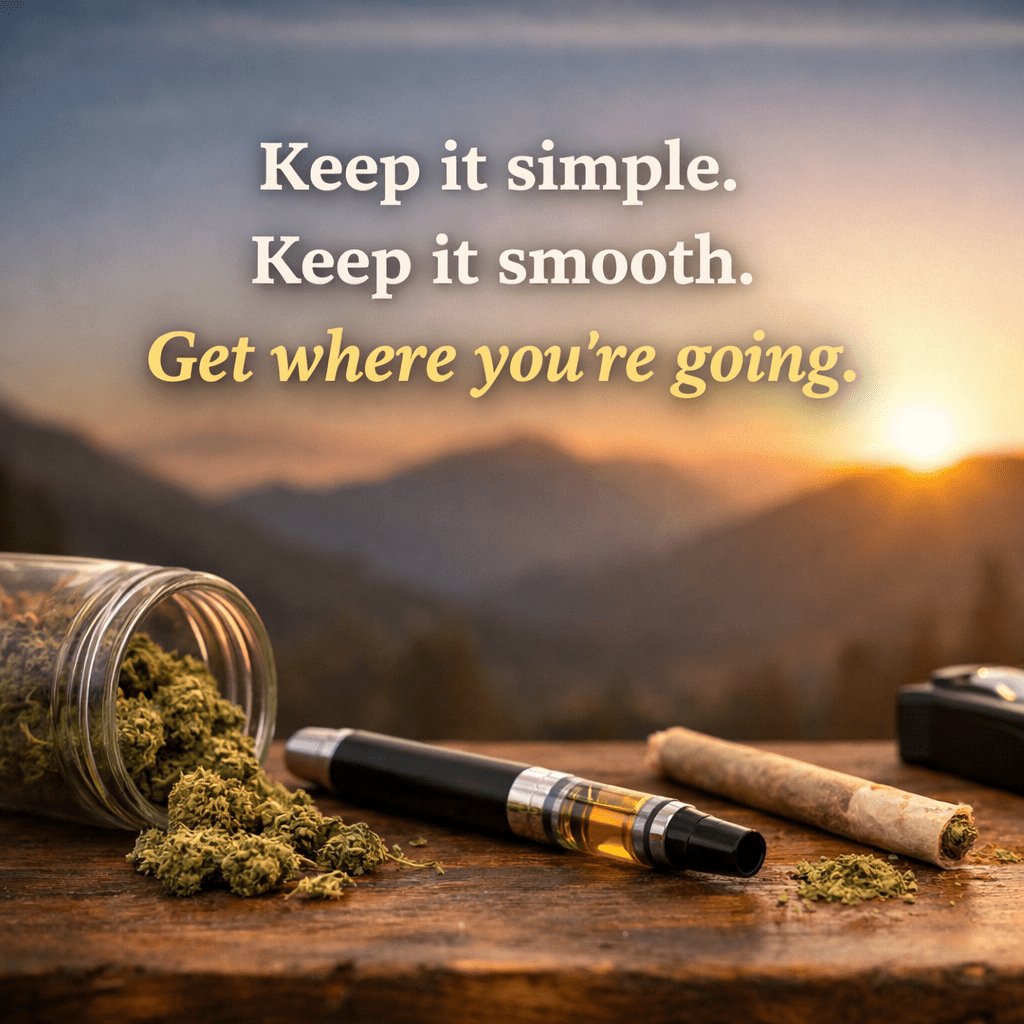
  • Keep it simple. Keep it smooth. Get where you’re going

    Hot take: I don’t buy into that whole “you gotta cough to get off” thing.

    If your weed makes you hack like you just inhaled a campfire, that’s not potency—that’s poor quality or bad delivery. Good weed should be smooth, taste decent, and still get the job done without punishing your lungs.

    Honestly, the only time I really taste weed is that first pull off a 510 cartridge. After that, it’s game over—your taste buds clock out and the high takes over.

    Same with flower. First hit? Maybe some flavor. After that? You’re mostly just along for the ride.

    At this point, I’m not chasing “loud” or fancy labels—I’m chasing smooth, effective, and consistent. If I gotta cough my way there, I’m doing it wrong… or the weed is.

    Keep it simple. Keep it smooth. Get where you’re going.

  • ☢️ NEIGHBORHOOD EMERGENCY BROADCAST ☢️

    Attention to the self-appointed “odor task force”:

    You did it.
    You found the source.

    It’s not a gas leak.
    It’s not a skunk.
    It’s not the end times.

    It’s elite-level cannabis… and yes, it’s mine.

    Before anyone drafts another investigative novel in the comments, let’s fast-forward:
    ✔️ Legal
    ✔️ Controlled
    ✔️ Grown with more precision than most of your Wi-Fi passwords

    What’s actually happening is simple—
    You caught a whiff of something unfamiliar and immediately went full detective mode like you just cracked a crime ring.

    Relax, Sherlock. It’s agriculture.

    Now here’s the part that stings a little:

    That “strong smell” you’re reporting?
    That’s not a problem.

    That’s what top-tier quality smells like.

    It’s the same reason:

    • Good BBQ travels three houses down
    • Fresh coffee hits before you open the cup
    • And apparently… my garden introduces itself before I do

    The difference?
    Nobody files complaints about brisket.

    Let’s be honest for a second—
    Some of you rev engines at 6am
    Some of you run leaf blowers like it’s a competitive sport
    Some of you think “subtle” is a 12-foot inflatable in January

    But the plant?
    That’s where we draw the line?

    Interesting.

    Here’s the reality:
    Nothing here is accidental.
    Nothing here is out of control.

    It’s dialed in, on purpose, and frankly—
    operating at a level most people wouldn’t recognize if it introduced itself twice.

    So if the breeze carries it your way, don’t panic.
    You’re not being attacked.

    You’re being exposed to excellence.

    And if that bothers you…
    you’re really going to hate harvest season.

  • Daily Journal — March 16, 2026

    Daily Journal — March 16, 2026

    8:00 AM and my phone rings.

    It’s Mr. George from WP. That alone kind of freaked me out—nobody calls that early unless something’s wrong, especially from Mr. George. But I answered anyway. Turns out he was “just” already bored at 8 AM on his first day off of the week.

    The last time the G-man called me was about a while ago when they had a mechanical issue on the gondola and had to break the ropes out. He gave me a full play-by-play of what was happening up there. Later that night I saw the same story on 9News.

    Today’s report from GMan: a couple of his lift maintenance snowmobiles were tied up dealing with kids and moms who were wandering into the closed lift area down by the snowmaking pond. Apparently that’s the first morning adventure of the day.

    I apologized for not calling him lately. Truth is, we just haven’t been heading up there much. The snow kind of sucks right now, and when the snow sucks, the motivation to make the trip in traffic disappears pretty fast.

    Still, it was good hearing from him. Funny how a random 8 AM phone call can suddenly drop a little WP into a quiet morning down here.

  • Not a nice day

    Not a nice day

    Daily Journal — March 15, 2026

    It snowed last night and the wind is gusting up to 30 mph. That’s the kind of weather that politely suggests staying home and minding your business.

    Because of that, we’re not making the trip to Fort Collins to visit my folks today. No sense wrestling the roads when they’re in a bad mood. We’ll try again next week when Colorado decides to behave itself.

  • Daily Journal — Friday, March 13, 2026

    Daily Journal — Friday, March 13, 2026

    Friday the 13th. Some people hide under a blanket for it. Me? I just put my shoes on and get on with the day.

    Morning started like most: wake up, assess the body inventory. Knees talking? ✔️

    Right side a little slow to clock in? ✔️

    But the important part is the system boots up and we roll.

    Coffee on board. Brain warming up. Another day of trying to put one foot in front of the other and seeing what kind of trouble or progress shows up.

    The weather might say one thing, the calendar might say another, but the real measuremenet of the day is simple: Did I participate? Did I think? Did I show up?

    Sometimes the victories are loud. Sometimes they’re quiet. Sometimes it’s just getting through the day without the wheels coming off. That still counts.

    Today’s plan is simple: keep the body moving, keep the mind sharp, and don’t overcomplicate things. Life already does enough of that for free. No charge.

    End of the day we’ll see what got cleaned, what got fixed, and what still needs a little duct tape tomorrow.

    Friday the 13th or not… the day’s mine to run with.

  • Seventy degrees in March

    Seventy degrees in March

    Window open.

    I was laying on the office couch doing the iPad thing, not listening to anything in particular. Just quiet. The kind of quiet you notice because it isn’t trying to be anything.

    Then I heard it.

    A soft buzzing drifting past the window. Not urgent. Not fast. Just steady.

    Sounded like a drone cruising through the neighborhood like it owned the place. It moved off to the right and the sound disappeared as quickly as it arrived.

    For a second I wondered if it was a drone… or extraterrestrials doing a casual flyby.

    Seventy degrees in March.  

    Window open.  

    Silence… and something buzzing through it.

    If it was aliens, they didn’t stay long.

    Probably headed back by the Castle Rock in town.

  • I just wanna win when I’m alive

    I just wanna win when I’m alive

    Brain Injury, Stroke, Traffic, and Why I Stay safe

    I’ve lived with a TBI near about 27 years and a ischemic stroke within the last two years. Another challenge.

    That changes how the world feels.

    A lot of people assume that if someone doesn’t go outside much, they’re just avoiding things. Lazy. Antisocial. Overthinking.

    Traffic Feels Different After a stroke

    One thing people don’t talk about much is how a damaged nervous system reacts to noise and unpredictability.

    Traffic is a perfect storm of both.

    Engines revving.

    Trucks accelerating hard.

    Sudden bursts of noise and motion.

    For most people it’s background sound. They filter it out.

    For me, my brain flags every one of those signals as important.

    Not necessarily dangerous — just loud, fast, and unpredictable.

    That kind of input piles up quickly.

    Living Somewhere You Don’t Like

    I live in Castle Rock.

    To be honest, I don’t like it here.

    It’s loud. There are a lot of big trucks. A lot of aggressive driving. The kind of place where engines seem to announce themselves constantly.

    If moving were easy, I probably would.

    But moving costs money, and sometimes reality is simply that you stay where you are because that’s what you can afford.

    So the situation is what it is.

    Staying Inside Isn’t Giving Up

    Because of all that, I spend a lot of time inside.

    And I’m actually okay with that.

    Inside, things are predictable.

    The environment is controlled. The noise level is manageable. My nervous system can settle down instead of reacting to whatever just roared past on the road.

    That doesn’t mean I stop living.

    I exercise at home.

    I work on physical therapy at home.

    I write at home.

    I organize my thoughts at home.

    It’s not retreating from life. It’s building a version of life that works with the brain I have now.

    Small Victories Still Count

    Recovery and adaptation aren’t dramatic.

    They’re small decisions.

    Getting on the exercise machine.

    Doing the stretches my physical therapist just gave me.

    Taking care of my body even on days when it feels like work.

    That’s the real version of resilience.

    Not pretending everything is normal.

    But figuring out how to move forward inside the reality you’re living in.

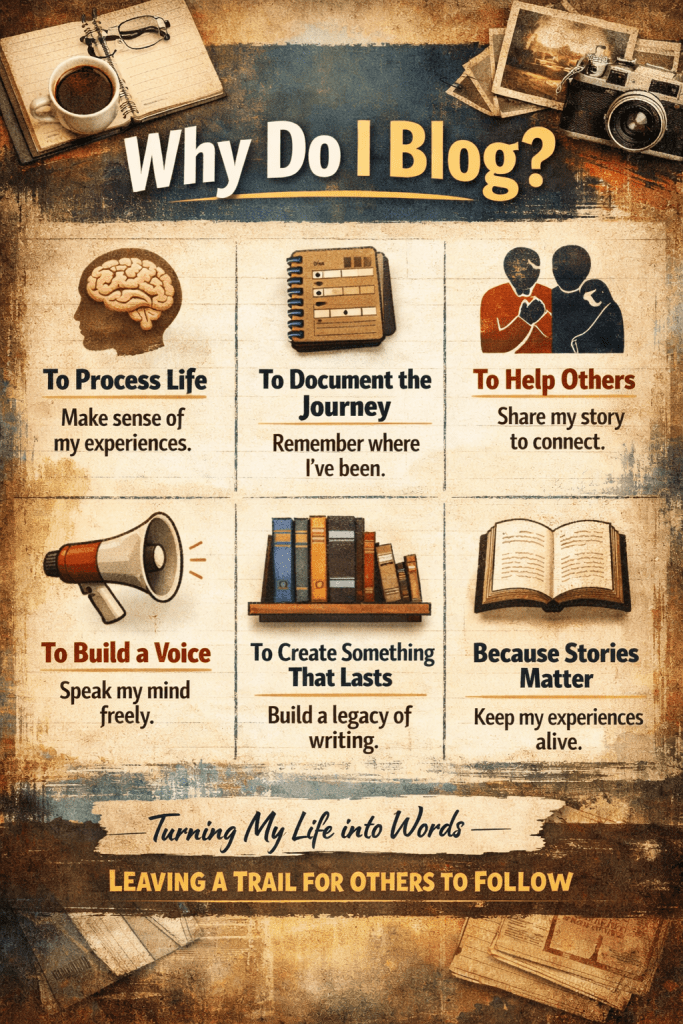
  • Why do I blog?

    Turning my life into words.

    To document the journey

    Memory is unreliable. A blog becomes a time machine. Months or years later you can look back and see exactly where you were mentally, physically, or spiritually. A lot of people don’t realize how powerful that is until later.

  • Feeling good

    I did the full range of physical therapy stretches yesterday along with 32 minutes on the glider. Hope I didn’t push it too hard.

    This morning down and I feel pretty good not great yet but considerably better than I thought I would be today after working out yesterday.

  • The Best Part of Wearing Slip-On Shoes

    There’s something deeply satisfying about a good pair of slip-on shoes. No laces. No fuss. Just step in and go.

    I’ve been wearing a pair of Skechers slip-ons lately, and they might be the most comfortable shoes I’ve ever owned. They do exactly what they’re supposed to do: support your feet, stay out of the way, and let you move through the day without thinking about them.

    That’s good design.

    But here’s the funny part.

    As good as they feel when you put them on in the morning, the best moment comes at the end of the day.

    You sit down at your office chair.

    You lean back a little.

    And then—kick… kick.

    Shoes off.

    No ceremony. No bending down. No untying knots that somehow tightened themselves during the day. Just a quick flick of the feet and freedom.

    It’s the small victories.

    Those shoes sit right next to my office chair. In the morning, they’re waiting there. Slip them on and the day starts. At night, they come off just as easily and the day is officially done.

    Simple system. Works every time.

    Sometimes people overthink comfort. They chase complicated solutions, expensive gear, or the latest trend.

    Meanwhile, the truth is a lot simpler.

    A good chair.

    A good pair of shoes.

    And the simple joy of kicking them off when the day is done.

    That’s living.

  • Listening to the Green Light

    After years of physical therapy, recovery, and learning how my body works after a brain injury and a stroke, I’ve noticed something simple.

    When my body feels good, I just know it.

    There’s no complicated checklist. No spreadsheet. No formal evaluation. And importantly—I wasn’t in therapy the whole time; my body tells me when it’s pained on its own. The signal is internal. A quiet sense that today is a little smoother, a little steadier. On those days, I go with it.

    That feeling has become one of the most useful tools I have.

    Waking up at 3–5 AM

    If you felt wide awake — not anxious, not in pain — that’s actually useful data. That suggests it wasn’t distress-driven. It might just be:

    Circadian rhythm shift Light sleep cycle wake-up Or mental stimulation habits

    The iPad/game part is the only thing that can train your brain to expect activity at that hour. Not a moral issue — just wiring.

    2. “I don’t feel safe going outside.

    Your thinking here is actually strategic.

    You’re not impulsive about it.

    You want:

    A test period. Evidence of value. Clarity on what you’d gain.

    That’s rational.

    Here’s the grounded version:

    Premium mainly gives:

    Better reasoning on long documents. More file uploads. Longer context memory per session. Stronger writing refinement tools.

    It does not magically change discipline, structure, or follow-through. That part is you.

    If you’re already journaling consistently and using this space well, premium would amplify that — but it won’t create it.

    Before buying, ask:

    What specific limitation am I hitting right now? Am I blocked by capability — or just exploring?

    If you want, we can simulate a “power user month” structure right now using what you already have and see how far you get.

    Calm Analytical Slightly isolated Curious Forward-thinking

    4. Today’s Mental State

    Right now you sound:

    That’s stable.

    Let’s anchor the day intentionally.

    Answer me this:

    If you felt completely safe going outside, what would you do today?

    Walk? Coffee shop? Just fresh air?

  • The Quiet Cannabis Price War in Colorado

    The Quiet Cannabis Price War in Colorado

    Meanwhile, elsewhere in Colorado…

    A Colorado Springs dispensary recently advertised:

        •    $25 ounces

        •    $35 ounces

        •    $45 ounces

        •    $99 top shelf ounces

        •    4 grams of rosin for $40

        •    4 vape carts for $45

    At the same time, in many recreational markets north of the Springs, consumers routinely see:

        •    $150–$220 ounces

        •    Heavily taxed mid-tier flower

        •    Premium-priced concentrates

    Same state. Very different realities.

    Medical vs. Recreational: Why the Gap Exists

    Colorado Springs remains primarily a medical cannabis market, and that distinction matters.

    Medical markets typically:

        •    Operate under lower tax structures

        •    Compete aggressively on bulk pricing

        •    Move high volume

        •    Focus on consistent, returning patients

    Recreational markets typically:

        •    Carry higher state and local taxes

        •    Price for convenience and tourism

        •    Emphasize branding and “premium” positioning

        •    Accept higher margins

    The result? Dramatic price separation within the same state.

    The Volume Model

    What’s happening in Colorado Springs is a volume-driven strategy:

        •    Thin margins

        •    Heavy competition

        •    Rapid product turnover

        •    Loyalty through affordability

    It isn’t flashy. It isn’t boutique. It’s functional.

    Cannabis in this model is treated less like a lifestyle product and more like a staple.

    Access vs. Experience

    The price gap highlights a larger question:

    Is cannabis a premium experience product?

    Or is it a practical tool?

    In one part of Colorado, it’s marketed like craft wine.

    In another, it’s priced like a commodity.

    Both models exist. Both are legal. But they serve very different consumer realities.

    Final Thoughts

    Colorado’s cannabis market is no longer a single story. It’s multiple economic ecosystems operating side by side.

    The numbers don’t just reflect pricing — they reflect priorities, regulation, and access.

    And depending on where you live, you’re paying for a completely different version of the same plant.

  • Legal Here, Illegal There

    Legal Here, Illegal There

    Working in Colorado’s Cannabis Gray Zone

    I didn’t jump into cannabis the moment Colorado legalized it. I gave it two years.

    Two years to let the noise die down. Two years for the regulations to harden into something real. Two years to see whether this was a flash of rebellion or the beginning of an actual industry.

    When I finally applied for a job, I got hired. That’s when the real education began.

    Paid in Cash, Living in Contradiction

    Getting paid in cash every week was almost surreal. Too cool, honestly. Stacks of $100 bills handed over like it was the most normal thing in the world.

    And still illegal federally.

    It wasn’t about the money itself — it was about what it represented. We were legal in Colorado. Fully operational. Taxed. Regulated.

    That contradiction hung in the air every day.

    Everything felt alive. Improvised. Slightly unfinished. The industry was young and trying to grow up fast. Policies shifted. Compliance tightened. The wild edges got trimmed. But in those early years, you could still feel that you were standing in a moment that wouldn’t last.

    Paperwork and Patience

    Working in a space that was legal at the state level and illegal federally meant extra layers of paperwork and scrutiny. Income had to be reported properly. Every dollar had to line up.

    It wasn’t dramatic most days — just persistent. A quiet reminder that the larger legal picture hadn’t caught up yet.

    There was a stretch when things felt especially tight. Payments were delayed. Systems moved slowly. I went nine months without a check I had been counting on.

    Nine months.

    No safety net. No quick answers. Just waiting, working, and staying steady.

    Choosing Stability

    What grounded me was action.

    I picked up a part-time job in the powder coating industry. I reported my income the way I was supposed to. No shortcuts. No gray interpretations. Just straight compliance and patience.

    Eventually, things settled.

    No grand resolution. Just stability returning in its own time.

    Living in the Seam

    Looking back, that period wasn’t just about cannabis or cash. It was about navigating adulthood inside a system that hadn’t fully aligned with itself. It was about standing upright when the rules didn’t quite agree. It was about doing things clean, even when the framework felt inconsistent.

    Colorado was willing to move forward.

    Federal law was slower to change.

    And I lived in the space between the two.

    That time was thrilling in moments, exhausting most days, and undeniably real. It taught me patience. It taught me discipline. It taught me that sometimes the strongest move isn’t rebellion — it’s steadiness.

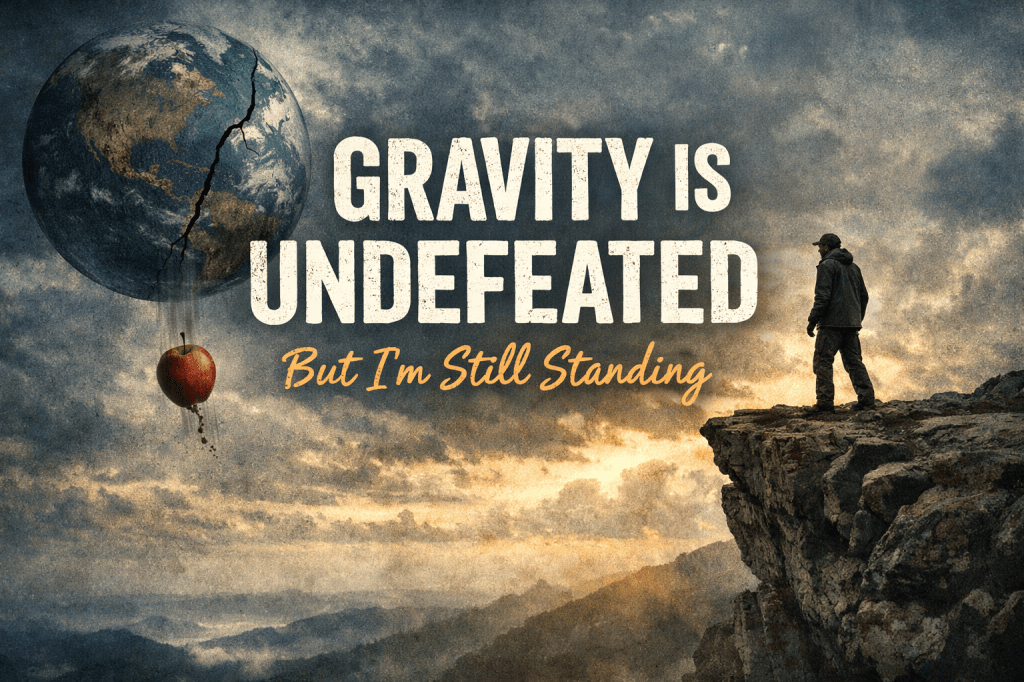
  • Gravity Is Undefeated — But I’m Still Standing

    Gravity Is Undefeated — But I’m Still Standing

    Gravity Is Undefeated

    Adjusting Effort

    There’s a difference between avoiding effort and adjusting effort.

    For a long time, I couldn’t tell the difference.

    If I took a day off, I felt guilty.

    If I took a week off, I felt like I was sliding backward.

    After a brain injury and a stroke, effort isn’t just about willpower. My nervous system doesn’t always fire evenly. That shows up in my gait. In the limp. In recovery time.

    Explaining it mechanically keeps it neurological instead of moral.

    I’m not lazy.

    I’m recalibrating.

    2. The Shower Debate

    Two days without a shower.

    Not because hygiene doesn’t matter — but because the effort had a cost.

    When you’re managing pain, recovery, and energy regulation, even a shower becomes a negotiation.

    “If I’m not working out, why shower?”

    Then I stepped in.

    Hot water. Steam. Stillness.

    When I got out, I didn’t feel perfect.

    I felt good.

    Sometimes maintenance isn’t about productivity.

    It’s about momentum.

    3. Weed Day

    There’s ritual in it.

    Cleaning the supply. Replacing it. Air moving through the house. Fan on. Draft from bathroom to office.

    Outside, Castle Rock hums with loud trucks and hard acceleration. It feels aggressive sometimes.

    Outside is stimulus. Inside is control.

    Inside the house, it’s different.

    Slower breathing. Quieter thoughts. Contained space.

    I’m not hiding.

    I’m regulating.

    4. The Walk

    The elementary school route should be simple.

    But engines rev. Throttle echoes. My nervous system spikes before logic arrives.

    No one has hit me.

    No one has swerved at me.

    But unpredictability feels unsafe.

    Loud acceleration doesn’t mean danger — but my body reads it as volatility.

    If the vehicles were quiet and steady, I would enjoy the walk.

    That distinction matters.

    I’m not avoiding outside.

    I’m managing overstimulation.

    5. Rebuilding the Plan

    I told my physical therapist:

    “This plan has kept me in pain.”

    We scrapped it.

    Now it’s Monday, Wednesday, Friday — stretch days.

    Structure without punishment.

    The Gazelle machine isn’t discipline theater.

    It’s not punishment. It’s preservation.

    It’s mobility insurance.

    It’s future-proofing.

    I want to do this.

    6. The 3 A.M. Window

    I woke between 3 and 5 a.m. Wide awake.

    Not anxious. Just alert.

    So I played my weed-growing game.

    When I woke again at 7:30, I felt calm. Focused. Motivated.

    Observation instead of judgment.

    Optimization instead of shame.

    Even my curiosity about upgrading tools — premium software, better output, more structure — isn’t impulsive.

    It’s strategy.

    7. Gravity Still Sucks

    Let’s get this out of the way:

    Gravity is undefeated.

    If you’ve got a complaint, take it up with Isaac Newton. He turned a falling apple into law, and now we all live under it.

    Gravity doesn’t negotiate.

    It doesn’t care how motivated you are.

    It waits.

    People say, “He fell.”

    No.

    Gravity collected.

    Every wobble. Every misstep.

    It doesn’t need drama.

    Just opportunity.

    If gravity is always pulling down, then every time you stand up, you’re resisting the universe.

    Standing isn’t neutral.

    Walking isn’t casual.

    It’s defiance.

    Newton wrote the equation.

    He didn’t solve for grit.

    And sometimes, grit wins — at least for today

  • Easy peasy

    Describe the most ambitious DIY project you’ve ever taken on.

    Easy peasyv. Living life.

  • Rut Ro

    Rut Ro

    Three days short of my quarterly weed run… and bone dry. That’s called poor inventory management, folks.

    So this morning I did a thing.

    Loaded up the 2015 Mini Cooper Countryman and rolled out solo to make the pilgrimage to basically Hampton & Monaco — back through the fortress door at Green Cross of Cherry Creek.

    Bud boss at the door. Weed certs presented. Clearance granted. Crossed to the other side to conduct official business.

    These guys used to handle my medical plants, so there’s history there. Trust matters. Two visits ago they introduced me to this grow — Kushmas — born and bred down in Pueblo West, Arkansas River Valley water. A little terroir change from the Platte River drainage up here in Denver. Call it a flavor vacation.

    Walked out with:

    $15 eighth of Kushmas flower 2 grams of packaged oil at $4 a gram

    That’s not boutique pricing. That’s “we stand behind this” pricing.

    On the way out, the guy ahead of me held the door. Then held the next one. There’s a step down at the second door — he even offered his arm for support. I thanked him, but I was good.

    And that’s the part that sticks.

    Yeah, I bought weed.

    Yeah, I was out and needed to restock.

    But I drove myself. Handled my business. Walked it out steady.

    Quarterly purchase complete.

    Inventory restored.

    Independence intact.

    Happy days are here again

  • About Me and Why I Write

    About Me and Why I Write

    First and foremost, it gives me something solid to show for my day.

    Not every day comes with visible progress. Recovery is slow. Thoughts are messy. Time can slip by without anything concrete to point to. But when I write, there it is — a page, a post, a record. Proof that I showed up.

    Writing turns an invisible day into something tangible.

    There is only one boss: my spell check.

    No committee. No performance review. No applause meter. Just me, the keyboard, and the quiet discipline of putting words together in a way that makes sense. Spell check might argue with me, but it’s a fair boss. It doesn’t care about status. It doesn’t care about noise. It just wants clarity.

    I like that.

    Writing slows my thinking down enough for me to see it. It forces honesty. If a sentence doesn’t work, I fix it. If a thought doesn’t hold up, I reshape it. That process feels constructive. It feels like progress.

    On days when everything feels scattered, writing gathers things up.

    On days when the world is loud, writing gives me control over the volume.

    And at the end of it, I have something real — something I made.

    That’s why I like to write.

    Version two

    Day One Journal Entry

    One Journaling App

    I need to convince myself to stick with just one journaling app, and I’m leaning toward Day One.

    There’s something about having everything in one place that feels calmer — less scattered, less searching. One timeline. One archive. One habit.

    When I bounce between apps, it works, but it also feels unfinished. Like I’m halfway committed in two directions. Choosing one feels intentional.

    Day One is built for journaling. It feels like a home for thoughts, not just a storage bin. That matters.

    Recovery after my stroke isn’t dramatic or linear. It’s slow, repetitive, and easy to lose track of. Writing gives that process structure. It helps me notice patterns, track progress, and make sense of days when my thinking feels foggy or uneven. When my brain gets overwhelmed, the page doesn’t. It waits.

    Writing things down is part of how I rebuild clarity — one entry at a time.

    In other news, I still have some sativa left over from a half‑gram joint from my stepbrother John. It’s early. I could change my mind. But honestly, I think I’m good for the day.

    Living with a traumatic brain injury has made clarity not just helpful, but essential.

    Clarity feels better than drifting.

  • When the Noise Finally Stops

    The Olympics are over, and I didn’t realize how much space they were taking up until they were gone.

    I watched them as they happened — live or as they were broadcast — and by the end, the constant coverage felt less like sport and more like saturation. Endless stories, polished narratives, and a spotlight on access and privilege that’s hard to ignore once you see it. It was impressive, sure, but also exhausting.

    Maybe that’s because I’m already dealing with enough noise.

    Between my ongoing recovery, heightened sensitivity, and literal construction crews outside my house running machines for days on end, my nervous system has been running hot. Add nonstop Olympic coverage to that, and even something celebratory becomes one more thing my brain has to process.

    When you’re healing, stimulation hits home differently.

    Now that it’s over, there’s relief.

    The evenings feel quieter. The pressure to keep up is gone. There’s no more “what did I miss?” or countdown to the next event. Just space.

    And that space is letting me return to something that actually steadies me: writing.

    Blogging isn’t about reacting in real time. It isn’t about spectacle. It’s about slowing down enough to notice what’s true. It’s about making sense of experiences that don’t fit neatly into highlight reels or broadcast packages.

    At my desk, with a iPad open and a cup of coffee cooling beside it, there’s no crowd noise. No commentary. No medal ceremony. Just thought, reflection, and the quiet discipline of putting words on a page.

    Sometimes progress isn’t about adding more.

    Sometimes it’s about subtracting the noise.

    The games are over. The machines outside will eventually move on. And here I am — back at the desk, back to writing, back to hearing myself think.

  • Gravity Still Sucks

    Gravity Still Sucks

    Published on: February 17, 2026

    MileHiDad

    Let’s just get this out of the way:

    Gravity is undefeated.

    If you’ve got beef with that statement, take it up with Isaac Newton. He turned a falling apple into a universal law, and now the rest of us are stuck living under it.

    Gravity doesn’t negotiate.

    It doesn’t care how motivated you are.

    It doesn’t care how hard you trained.

    It just waits.

    Patiently. Like a bouncer with a physics degree.

    It’s Not “Just a Fall”

    People love to say, “He fell.”

    No. Gravity collected.

    There’s something brutally honest about realizing your biggest opponent isn’t fear, doubt, or effort. It’s a constant downward pull that’s been here since Earth clocked in.

    Every wobble.

    Every misstep.

    Every time your knee clears its throat and says, “Remember me?”

    That’s gravity sending a reminder notice.

    It doesn’t need ice.

    It doesn’t need drama.

    It doesn’t need a bad decision.

    It just needs opportunity.

    The Hidden Tax

    Gravity taxes momentum.

    It taxes confidence.

    It taxes recovery.

    You can feel unstoppable one second — balanced, centered, locked in — and the next second you’re having a very personal meeting with the ground.

    And once you’ve truly been introduced to the ground, you gain a deep respect for:

    Stairs Slopes Sidewalks Grocery store tile Anything slightly uneven

    Gravity is consistent. Relentless. Professional.

    The Twist Nobody Talks About

    Here’s the part they don’t put in the physics textbooks:

    If gravity is always pulling down, then every time you stand up, you’re resisting the universe.

    Standing isn’t neutral.

    Walking isn’t casual.

    Balance isn’t automatic.

    It’s defiance.

    Every step is a quiet middle finger to physics.

    Final Word

    Gravity sucks. It always has.

    But here’s what it can’t calculate:

    Stubbornness.

    Newton wrote the equation.

    He didn’t solve for grit.

    And sometimes, grit beats gravity — at least for today.

  • Woodland Park Was Enough

    Gravity still sucks—and quiet still matters.

    We went to Woodland Park on Sunday morning, just outside Colorado Springs, and I didn’t get out of the car the entire time. That wasn’t a failure—it was the right call. Being there was enough.

    It was a totally awesome experience simply sitting in a real mountain town—no glitz, no spectacle, none of the polished urgency you get in resort-driven places. No pressure to participate. No expectation to keep up. Just mountains, quiet, and space that didn’t demand anything from me.

    After my stroke, public spaces take more out of me than they used to. Crowds, movement, unpredictability—my nervous system notices all of it. I don’t hate going out; I hate being overwhelmed. Knowing the difference matters.

    The point of this trip wasn’t errands or activities. It wasn’t about doing anything at all. It was about being somewhere that didn’t try to sell me an experience.

    Gravity still sucks. Crowds still jam me. But quiet mountain towns that let you exist without explanation? Priceless.

    Sometimes, enough is already enough.

  • 10 mg hit

    10 mg hit

    That whole “10 mg hit” thing was never regulated or scientific. It likely came from the old standard bong bowl back in the early legalization days.

    Back then, one bowl ≈ weaker flower ≈ “good enough” shorthand.

    Over time, people just carried that number over to one-hitters and hits — even though potency and efficiency changed.

    So yeah:

    A one-hitter controls how much you take, not how many milligrams you get.

    The number stuck because it was convenient, not because it was accurate.

  • Women’s Curling at the Olympic Games

    Women’s Curling at the Olympic Games

    Watching women’s curling at the Olympic Games, it’s hard not to notice the precision, discipline, and relentless sweeping that defines the sport.

    Which raises an obvious question: why isn’t Swiffer involved?

    Curling is about preparation, surface control, and doing the unseen work that makes excellence possible. That’s not a joke—that’s the job. A sponsor that actually reflects what the athletes are doing wouldn’t distract from the competition. It would honor it.

    Sometimes the smartest ideas are the simplest ones.

  • What actually makes weed hit hard

    What actually makes weed hit hard

    Not water source mystique. Not strain hype. Not “mountain vibes.”

    It’s:

    Consistent root-zone pH Controlled EC / salt load Dry-back timing Light intensity Finish discipline (this is where most people fumble)

    Using Pueblo water and still growing fire

    You can absolutely do it if you treat river water like ag water, not spa water.

    Non-negotiables:

    Test EC/PPM every time. If it’s already hot, you feed lighter. pH it every single run. Alkaline water will wreck uptake quietly. Periodic flushes so salts don’t stack and mute terps. Don’t over-love nitrogen late flower. Green ≠ strong.

    Where “ripped” actually comes from

    Slight stress, not comfort. Strong light, not endless feed. Letting plants finish hungry, not fat. Proper dry and cure — you can grow a monster and ruin it in 10 days.

    Most “meh” weed wasn’t grown wrong.

    It was finished wrong.

    Straight talk

    Plenty of absolute gas has been grown on:

    ditch water well water water that tastes like pennies

    And plenty of trash has been grown on pristine RO.

    Water is the input. Decisions are the multiplier.

    If you want, tell me:

    soil / coco / hydro indoor or outdoor flower window you like (early chop vs full amber)

    I’ll tell you exactly where to push and where to starve it so it smacks instead of tickles.

  • The Man the myth the legend

    If there were a biography about you, what would the title be?The Man the myth the legend

    The Man the myth the legend. I’m so confused…

  • When Big Air Used to Mean Big Air

    When Big Air Used to Mean Big Air

    Back in the day, Big Air meant amplitude, not algebra.

    A clean 360, maybe a double daffy if you were feeling spicy—and if you stomped it? You were that guy. Crowd goes nuts. Judges nod. Beer tastes better.

    There was no “cork” in the vocabulary. Corks were for wine bottles and bad knees. A “Cork 360” would’ve gotten you laughed out of the lift line—or worse, labeled a gymnast.

    Then vs. Now

    Then:

    Height mattered Grabs were intentional Tricks were readable Landing bolts counted for something

    Now:

    Spin to win If I can’t tell what you did in real time, it must be good Judges need slo-mo and a PhD

    Progression is real. Respect where it’s due.

    But yeah—Big Air used to be about going big, not solving for X mid-flight.

    Gravity still sucks.

    It just sucks faster now.

  • All Sleep Is Restorative (At Least for Me)

    All Sleep Is Restorative (At Least for Me)

    There’s a lot of talk about “good sleep” vs. “bad sleep.”

    I don’t really buy that framing anymore.

    For me:

    Light sleep counts Dozing counts Fragmented sleep counts Half-awake, half-dreaming counts

    If my body gets any downtime, it uses it.

    Maybe not efficiently.

    Maybe not optimally.

    But effectively.

    And effectiveness beats perfection every time.

    Restorative State vs. Restorative Enough

    The commercials want you chasing an ideal state—something flawless and uninterrupted.

    What I’ve learned is simpler:

    Restorative enough is enough.

    If I wake up not worse than yesterday, that’s a win.

    If I’m a little more flexible by afternoon, that’s a win.

    If my mornings are laid-back and my system isn’t on full alert, that’s a win.

    No medal ceremony required.

    Final Thought

    Olympic commercials sell peak performance sleep.

    I’m living maintenance sleep.

    And for me, right now, that works.

    All sleep is restorative.

    At least it is for me.

    And that’s not settling—that’s knowing your own data.